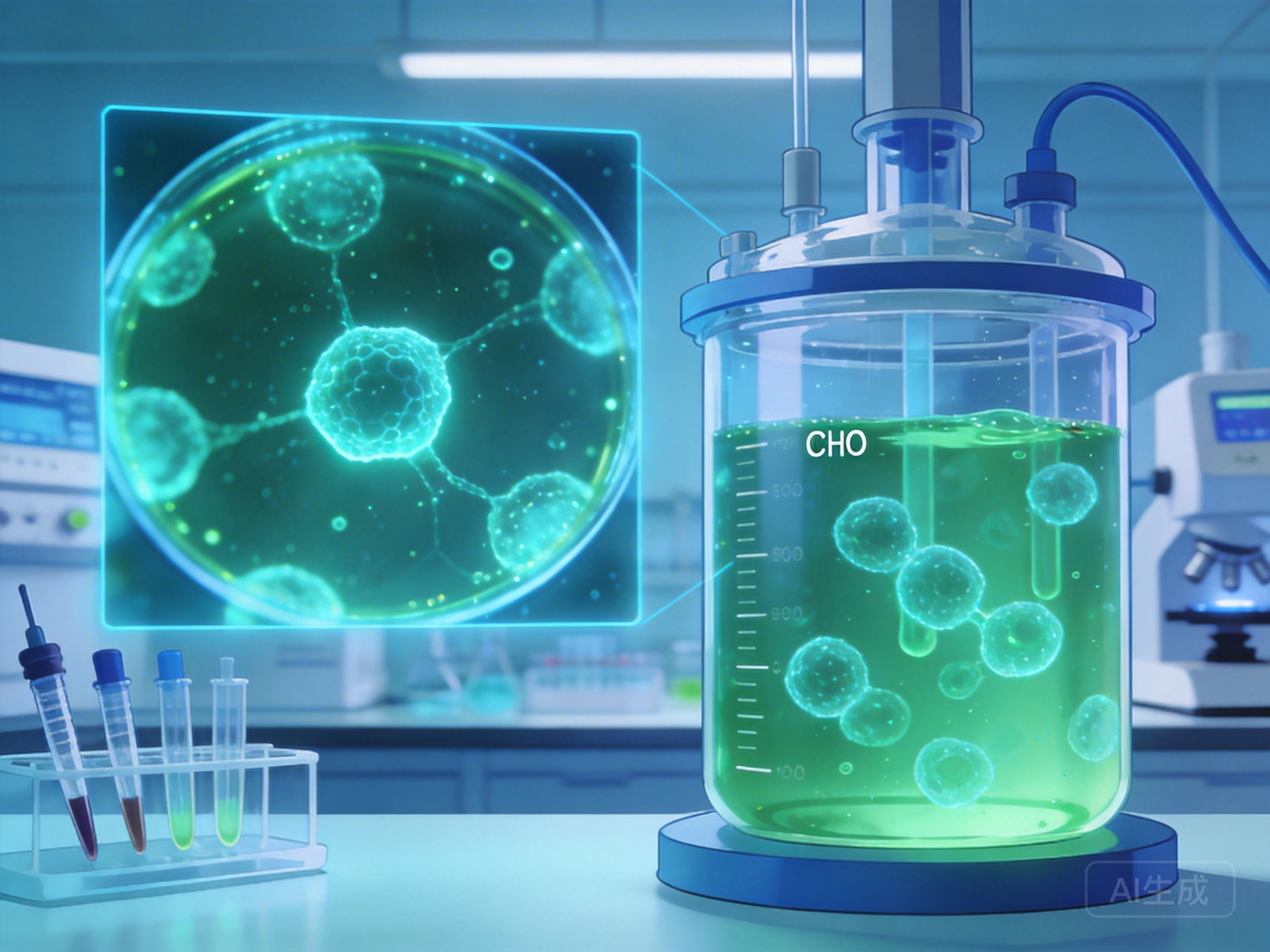
High-quality recombinant protein production services for research, diagnostic, and therapeutic applications
Our Protein Expression Platform
Leverage our proprietary CHO cell expression system and AI-optimized sequence design to produce high-quality recombinant proteins with exceptional yield, purity, and biological activity.
High-yield expression (mg to gram scale)
Native post-translational modifications
Exceptional batch-to-batch consistency
Custom purification strategies
Rigorous quality control testing
Recombinant Protein Expression Workflow: From Gene to Purified Protein
Our Protein Expression Services
Transient Protein Expression
Fast turnaround protein production for preliminary studies, assay development, and proof-of-concept experiments.
1-2 week turnaround
μg to mg scale
Ideal for early-stage research
Small-scale testing of multiple constructs
Stable Cell Line Development
Generate stable, high-expressing cell lines for long-term, scalable protein production for diagnostic and therapeutic applications.
10-12 week turnaround
Site-specific integration
Long-term expression stability
GMP-compliant cell banking available
Large-Scale Protein Production
Scalable protein production from gram to kilogram scale for commercial diagnostic and therapeutic applications.
10L to 1000L bioreactor scale
Fed-batch and perfusion culture
Consistent yield and quality
Regulatory support for IND submissions
We Express All Types of Proteins
Monoclonal Antibodies
Bispecific Antibodies
Antibody Fragments
Fusion Proteins
Viral Proteins
Enzymes
Receptors
Cytokines & Growth Factors
Rigorous Quality Control
Purity
SDS-PAGE, HPLC, >95% purity guaranteed
Identity
Mass spectrometry, Western blot validation
Activity
Functional binding and activity assays
Safety
Endotoxin, mycoplasma, and sterility testing
Why CHO Cells Are the Gold Standard for Recombinant Protein Expression
Understanding the science behind our platform helps explain why our proteins consistently outperform alternatives in downstream assays.
The CHO Cell Advantage
Chinese Hamster Ovary (CHO) cells have been the dominant mammalian expression system in biopharmaceutical manufacturing for over four decades — and for good reason. Unlike bacterial systems (E. coli) or yeast, CHO cells are capable of performing the full repertoire of human-compatible post-translational modifications (PTMs), including N-linked and O-linked glycosylation, disulfide bond formation, and phosphorylation.
These PTMs are not cosmetic additions — they are often critical for protein folding, stability, receptor binding, and immunogenicity. A therapeutic protein or diagnostic antigen expressed in bacteria may be insoluble, misfolded, or immunologically inert. The same sequence expressed in CHO cells folds correctly, carries the right glycan structures, and behaves as it would in a human physiological context.
At AntibodyLLM, our CHO expression platform is further enhanced with CRISPR site-specific integration and our proprietary UCOE (Ubiquitous Chromatin Opening Element) technology, which eliminates the epigenetic silencing that leads to expression decline in conventional stable cell lines.
Why Glycosylation Matters
Glycosylation — the attachment of oligosaccharide chains to asparagine (N-linked) or serine/threonine (O-linked) residues — profoundly influences every major property of a recombinant protein:
Serum half-life: Proper sialylation prevents rapid clearance by hepatic asialoglycoprotein receptors, extending the circulatory half-life of therapeutic proteins 5–10×.
Effector function: For antibodies, core fucosylation of the Fc N297 glycan directly determines ADCC activity — a key mechanism for cancer therapeutics.
Antigenicity: Diagnostic antigens must carry the correct glycoforms to be recognized by patient antibodies — a mismatch causes false negatives in serological assays.
Solubility & stability: Glycans act as hydrophilic shields, reducing aggregation and improving thermal stability at physiological temperatures.
"When we receive protein produced in E. coli and re-express the same construct in our CHO platform, we routinely see 2–4× improvements in ELISA sensitivity for diagnostic antigens — attributable entirely to correct glycosylation." — AntibodyLLM Protein Science Team
From Gene to Purified Protein: Our 6-Step Process
Every project follows a rigorously validated workflow with defined quality checkpoints at each stage. You receive a progress report at every milestone.
1
Gene Optimization
Codon optimization for CHO expression; signal peptide engineering; removal of cryptic splice sites and instability motifs.
2
Vector Construction
Cloning into proprietary expression vectors with UCOE elements; selection marker integration; construct sequence verification.
3
Transfection
Lipid-mediated transient transfection or CRISPR-directed stable integration at safe harbor loci (AAVS1 or Rosa26).
4
Selection & Screening
Antibiotic selection; single-cell cloning by FACS; expression screening across 96-well plates to identify top-producing clones.
5
Purification
Affinity chromatography (Protein A/G/His-tag); ion exchange polishing; size exclusion for aggregation removal; buffer exchange into your specified formulation.
6
QC & Delivery
SDS-PAGE, SEC-HPLC, mass spec, endotoxin LAL assay, functional binding assay. Full CoA report delivered with every shipment.
1–2 wks
Transient Expression
Steps 1, 3, 5–6
10–12 wks
Stable Cell Line + Production
All 6 steps
>95%
Project Success Rate
Across all protein types
Tailored for Your Application
Protein requirements differ fundamentally across applications. We configure expression conditions, purification strategies, and QC panels accordingly.
IVD Diagnostic Antigens
Immunoassay-grade antigens require correct glycosylation to mirror native epitope conformation, ensuring patient antibodies bind with the same affinity as to the natural pathogen.
Serological ELISA and CLIA antigens
POCT lateral flow capture antigens
Viral antigens (HIV, HBV, Ebola, Hantavirus)
Low endotoxin for sensitive assays
Therapeutic Proteins
Biologic drugs demand GMP-compatible processes, defined glycan profiles, and validated analytical packages that satisfy regulatory submissions from IND through BLA.
Monoclonal & bispecific antibodies
Cytokines and growth factors
Fc-fusion proteins and enzyme replacement
GMP cell banking available
Research-Grade Proteins
Academic and early-discovery teams need fast turnaround and flexibility — multiple constructs, small batches, and iterative design cycles without minimum order constraints.
μg–mg quantities, 1–2 week delivery
Structural biology (cryo-EM, X-ray grade)
Immunogen production for immunization
Flexible construct testing (tags, truncations)
Frequently Asked Questions
Common questions from IVD manufacturers, CROs, and academic researchers working with our protein expression service.
For transient expression, we deliver purified protein within 1–2 weeks of receiving a confirmed construct sequence. For stable cell line development followed by production, the full timeline is 10–14 weeks depending on protein complexity and the scale requested. Rush transient expression (7 business days) is available for standard constructs. We provide a detailed project timeline at project initiation.
There is no strict minimum order quantity. Our transient expression service starts at 100 µg of purified protein, which is sufficient for preliminary ELISA or SPR binding studies. We scale on request from 100 µg up to hundreds of grams depending on your timeline and budget. For early-stage research, we recommend ordering 0.5–1 mg to allow sufficient material for initial assay development and redundancy.
Our standard purification pipeline delivers >95% purity as assessed by non-reducing SDS-PAGE and SEC-HPLC. For applications requiring higher purity (structural biology, therapeutic use), we offer additional polishing steps — ion exchange chromatography, hydrophobic interaction chromatography, or preparative SEC — to achieve >98–99% purity. Purity data from two orthogonal methods is included in every Certificate of Analysis.
Yes — a full Certificate of Analysis is included with every order at no additional cost. The standard CoA covers: protein identity (mass spectrometry), purity (SDS-PAGE + SEC-HPLC), concentration (A280 and BCA assay), endotoxin level (LAL assay, <1 EU/mg standard), biological activity (ELISA or SPR binding data where applicable), and formulation/storage conditions. Extended CoA packages including mycoplasma testing, glycan analysis, and stability data are available on request.
Yes, but with important context. Single-pass type I and type II membrane proteins (e.g., receptor ectodomains, viral surface antigens expressed as soluble truncations) are routinely produced with high success rates. Multi-pass transmembrane proteins and GPCRs require specialized approaches — detergent solubilization, nanodisc reconstitution, or truncated ectodomain constructs — and we assess feasibility on a case-by-case basis. We recommend a free 30-minute feasibility consultation before initiating complex projects.
Our standard specification is <1 EU/mg by LAL chromogenic assay. For highly sensitive immunoassays where even low endotoxin can contribute to non-specific background (e.g., cytokine detection assays, some CLIA platforms), we offer ultra-low endotoxin processing to <0.1 EU/mg. This is achieved through additional endotoxin-removal steps using polymyxin B resin or detergent-phase separation, depending on protein stability.
Yes — and this is one of the core advantages of our platform. Projects typically start with transient expression for proof-of-concept, progress to stable cell line development for consistent supply, then scale to 10L–1000L bioreactor production. Because we use the same expression vector and CHO host throughout, the transition between scales involves minimal process re-development. We maintain master and working cell banks for all stable lines, enabling rapid restarts of production campaigns.
The default formulation is PBS pH 7.4 with 10% glycerol as a cryoprotectant. We can accommodate custom formulation requests at no additional charge — including specific salt concentration, pH, addition of excipients (trehalose, sucrose, BSA), or delivery in your proprietary assay buffer. Please specify your buffer requirements at project initiation. Lyophilized formats with defined reconstitution instructions are also available for long-term stability.
Absolutely. All projects are covered by a mutual NDA before any technical discussion begins. Sequence data, expression constructs, and project data are stored on isolated servers accessible only to assigned project team members. We do not retain or use client IP for any internal purpose. Cell lines, plasmids, and data generated in your project remain your intellectual property. We are happy to sign client-specific CDAs, MTAs, or SLAs as required.
Further Reading from Our Technical Blog
Go deeper on the technologies powering our protein expression platform.